
Samuel’s Warning to Israel
Common SenseThis flow follows the biblical sequence Paine invokes: Israel requests a king, receives a warning, and accepts the burdens of monarchy.
increasing Bearing strength in each event
 decreasing
Bearing strength in each eventdecreasingA Demand for Kingship

A Demand for Kingship
A Public Request
The people approach Samuel and ask for a king to judge them like other nations. Paine stresses that their request is collective but not, in his interpretation, wise.
A Question of Motive
Their desire to match surrounding societies becomes central to the episode. Paine argues that imitation displaces the distinction they might otherwise have valued.
Samuel’s Distress

Samuel’s Distress
A Rejected Judge
Samuel is displeased by the demand and turns to God. Paine reads the reaction as recognition that the request changes more than the identity of a public official.
Rejection of Rule
The answer interprets the people’s choice as a rejection of divine rule. Paine uses this response to cast monarchy as a matter of moral allegiance.
The King’s Manner
The King’s Manner
A Catalogue of Exactions
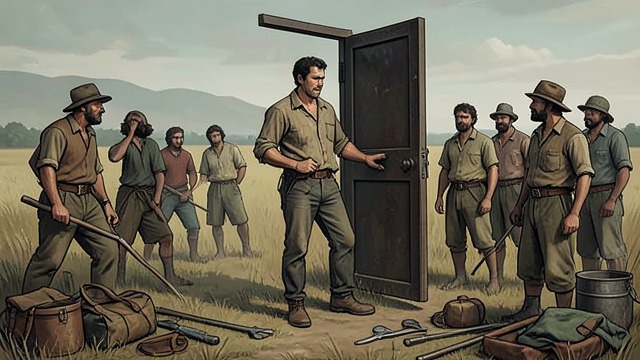
Samuel warns that a king will take sons for service, assign labor, and claim property and produce. The people are shown the material cost of royal rule.
Power Made Concrete
Paine emphasizes the specificity of the warning. Monarchy is not an abstract title; it reaches into households, fields, work, and public resources.
The Warning Ignored

The Warning Ignored
Persistence in the Request
The people refuse to abandon their demand and insist on having a king. Paine sees their persistence as a decision made despite a clear account of the costs.
Security and Imitation
They want a ruler to judge them and fight their battles, while also seeking resemblance to other nations. The apparent promise of protection carries the risk of dependence.
Regret After the Sign
Regret After the Sign
Fear and Confession
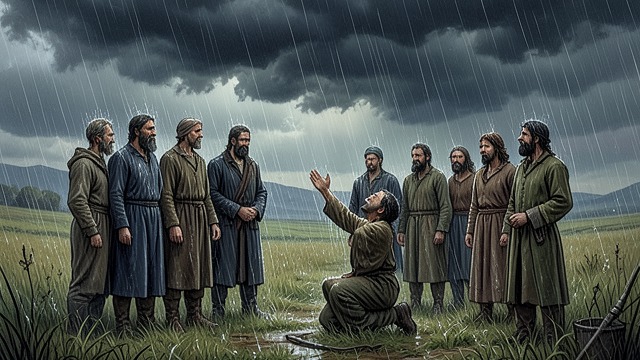
Thunder and rain frighten the people, who acknowledge their wrongdoing in asking for a king. Their response confirms the seriousness Paine assigns to the choice.
A Lasting Political Lesson
Paine uses the episode to argue that the scriptural warning against monarchy is explicit. The narrative becomes a foundation for his broader political critique.
About 130 years after the earlier episode in Paine’s chronology
At the moment Samuel hears the request
When Samuel relays the warning to the people
After Samuel finishes his warning
After the thunder and rain in Paine’s account
